

A scrap dealer pays for material the day it reaches the shop. The money only comes back once that material has been sorted and sold on to the next buyer up the chain. Until it does, there is less cash on hand for the next purchase.
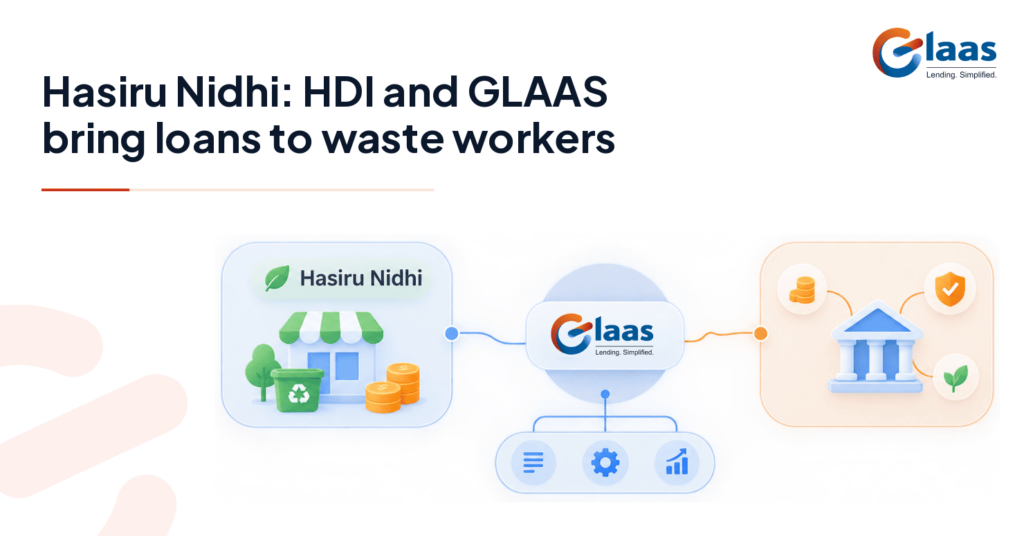
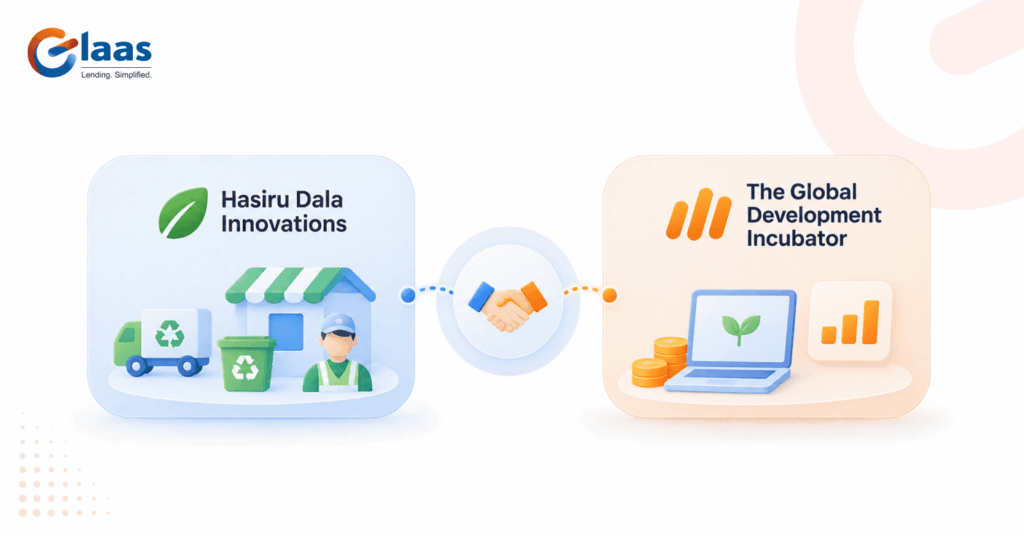
Hasiru Nidhi was built for that gap. It’s a working capital programme for India’s informal waste sector, launched under Mool Capital by Hasiru Dala Innovations (HDI), The Global Development Incubator (GDI) and Gromor Finance, the RBI-registered NBFC that operates GLAAS. The first loan was disbursed at Deepavali 2026. Mool Capital aims to build an inclusive financing ecosystem for the entrepreneurs who power India’s circular economy.
At its centre is a partnership: HDI understands these entrepreneurs and how their trade runs, and GLAAS brings the lending.
Key takeaways
- Hasiru Nidhi is a working capital programme for India’s informal waste sector, launched under Mool Capital, with its first loan disbursed at Deepavali 2026.
- The programme pairs Hasiru Dala Innovations’ knowledge of waste entrepreneurs with technology-enabled financing from Gromor Finance, delivered through GLAAS.
- The Global Development Incubator brings experience in building ecosystems and incubating financing facilities.
- With working capital of their own, waste entrepreneurs can buy and trade more material without waiting on an advance from a buyer.
- Loans from Gromor Finance are reported to the credit bureaus, so repayments can build a formal credit record that future lenders can assess.
Why does it take both HDI and GLAAS?
Most of the waste trade runs on cash and relationships, not paperwork. So when a lender pulls a credit bureau report for one of these entrepreneurs, it usually finds very little. That says nothing about whether the business is any good; the record simply doesn’t exist yet.
The knowledge a lender would need does exist. It sits with organisations like HDI, which has worked with waste pickers and small waste businesses for years. What HDI doesn’t have, or need, is a licence to lend.
That’s the side GLAAS covers. Gromor Finance provides the regulated lending, and GLAAS is its platform for building and running lending programmes. HDI never has to become a lender to get credit to the people it works with.
GDI’s part is the groundwork: experience in building ecosystems and incubating financing facilities like this one.
What changes for a waste entrepreneur?
The first change is immediate. With working capital of their own, an entrepreneur can buy and trade more material without waiting on an advance. It can also put them in a better position when negotiating prices.
The second change takes longer. Gromor Finance is regulated by the RBI, so the loans and repayments are reported to the credit bureaus, as the Reserve Bank of India (Non-Banking Financial Companies – Credit Information Reporting) Directions, 2025, dated November 28, 2025, require. For an entrepreneur who has only borrowed informally until now, that can be the start of a formal credit history.
That history doesn’t guarantee a bigger loan later, but it gives a lender a borrowing record to go on. HDI’s aim is that, as it grows, larger loans and longer terms become possible, including for equipment. It’s part of HDI’s vision of Inclusive Circularity®, where economic opportunities, affordable access to credit and growth are within reach for informal waste workers and entrepreneurs.
Why this matters beyond the waste sector
Most of GLAAS’s work is with digital platforms: marketplaces, payment companies, software platforms and supply chain businesses that already serve MSMEs. Their transaction records give a lender something concrete to work from, and GLAAS supplies the lending side, so these partners don’t need a licence to lend.
Hasiru Nidhi shows the same structure working without a digital platform in the middle. HDI’s understanding of these entrepreneurs doesn’t replace underwriting, and the credit checks a lender has to make still apply. But it is a real input into designing credit for borrowers that no bureau report describes well.
Plenty of organisations work closely with small businesses that lenders find hard to assess from the outside. Where that knowledge exists, a regulated lending partner can be brought alongside it.
Frequently Asked Questions
1. What is Hasiru Nidhi?
Hasiru Nidhi is a working capital programme for India’s informal waste sector, launched under Mool Capital by Hasiru Dala Innovations, The Global Development Incubator and Gromor Finance. Its first loan was disbursed at Deepavali 2026.
2. What does GLAAS do in Hasiru Nidhi?
Gromor Finance, the RBI-registered NBFC that operates GLAAS, provides the financing, and GLAAS is the platform used to build and run the lending programme. Hasiru Dala Innovations brings its knowledge of the waste trade and the entrepreneurs in it.
3. Does HDI lend the money?
No. The lending sits with Gromor Finance, a regulated lender. HDI brings its understanding of the entrepreneurs and their trade, so it can help get credit to them without becoming a lender itself.
4. What is GLAAS?
GLAAS lets digital platforms offer working capital to the businesses they serve, without the platform needing a lending licence of its own. It operates through its own licensed NBFC, Gromor Finance, and works with marketplaces, payment companies, software platforms and supply chain businesses. More than ₹1,500 Cr has been disbursed to MSME borrowers through it.
5. Can this model work outside the waste sector?
A similar model can work for organisations that serve small businesses and understand how those businesses operate. GLAAS runs it with digital marketplaces, payment companies, software platforms and supply chain businesses, where the partner brings the businesses it serves and the lending sits with Gromor Finance.